The truth about SMP longevity for men: when it fades and what a refresh costs
Scalp micropigmentation for male density typically lasts three to eight years before fading becomes visible enough to warrant a colour refresh session.
Scalp Studio
Updated 6 August 2026
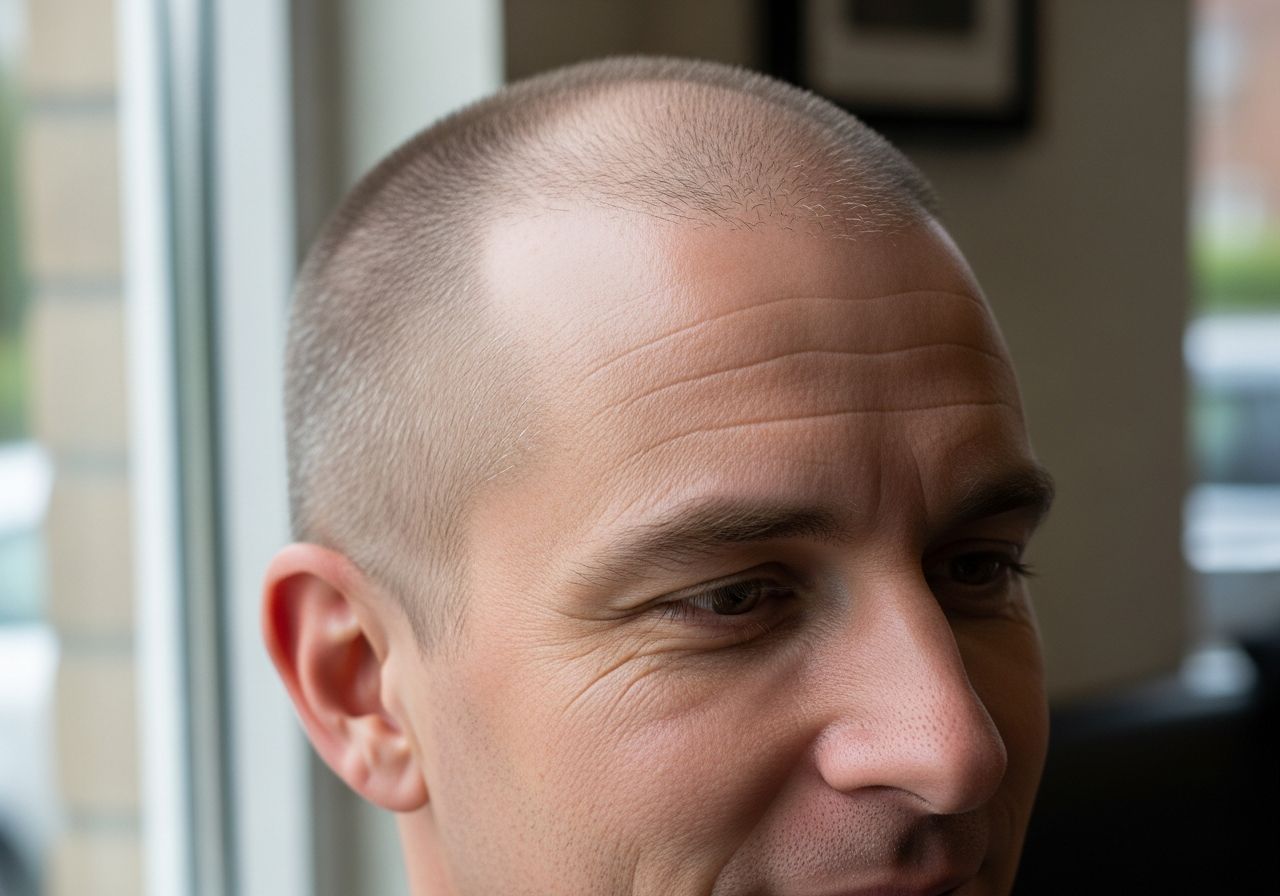
You have done the research, you like the results you have seen, and now you want to know the one thing most consultations gloss over: how long before it starts to fade, and what does maintenance actually cost over time? This article sets out the honest timeline for male density SMP, the specific factors that will either extend or shorten your results, and exactly what a colour refresh involves when you eventually need one.
What the longevity of male density SMP actually looks like
Scalp micropigmentation for male density typically lasts three to eight years before fading becomes noticeable enough to affect the result. Most men fall somewhere between the four and six year mark. That range is wide because it reflects genuine variation in skin biology, lifestyle, and aftercare, not vague marketing language.
The pigment sits at the epidermal to upper dermal interface, roughly 1.5 to 2 millimetres into the dermis. Your body does not remove it overnight. What happens is a gradual process: epidermal pigment clears within around 27 days via normal skin cell turnover, while the deeper dermal pigment fades more slowly as immune cells and UV exposure break it down over years. The result never disappears entirely, but the sharpness and density of the dots diminish. At a certain point, the contrast between the pigment and your scalp drops enough to soften the look you paid for.
A 2025 case series from the Second Affiliated Hospital of Chongqing Medical University tracked visual density scores in ten patients. Immediately post-treatment, scores averaged 8.7 out of 10. At the six-month follow-up, they had modestly declined to 7.7. That is a contained drop within the first half-year; the more significant cumulative fading happens across years three to five for most men.
The factors that accelerate fading in men specifically
Sun exposure is the single biggest accelerant. UV radiation degrades dermal pigment faster than any other lifestyle variable. If you are regularly outdoors with an uncovered shaved head, whether that is on a construction site, a golf course, or a Mediterranean holiday, your SMP will fade measurably faster than it would for someone who applies SPF 30 to 50 daily. Practitioners recommend SPF as a non-negotiable part of long-term aftercare, not an optional extra.
Skin type matters considerably. Oily skin creates a barrier environment that causes pigment to migrate and fade more quickly; dry or mature skin tends to hold pigment longer. Men with faster cellular metabolism, generally younger men with healthier and more active skin turnover, will see earlier fading than older men with slower epidermal cycling. This sounds counterintuitive, but healthy skin is more effective at clearing foreign material.
Aftercare in the first 30 days is critical and has a permanent effect on longevity. During days one to four, you need to keep water, shampoo, and sweat off the scalp entirely. Days five to ten allow gentle washing, but sun exposure is still to be avoided. From day ten you resume normal grooming with SPF applied daily. Swimming pools should be avoided for 28 days after your final session, as chlorine is particularly aggressive on fresh pigment. Cutting corners in those early weeks does not just affect the healed result; it shortens the overall lifespan of the work.
Certain medications, particularly those that accelerate skin cell turnover or affect immune response, can also speed fading. It is worth disclosing your full medication list before treatment so your practitioner can flag any relevant interactions.
Scarring alopecia is worth noting separately. The 2025 case series found that patients with scarring conditions experienced greater fading at six months than those with androgenetic alopecia, the standard form of male pattern baldness. If your density work overlaps scar tissue, plan for earlier refresh appointments.
What a colour refresh appointment actually involves
A refresh, sometimes called a touch-up or colour boost, is not the same as a full initial treatment. Most men need a single session, occasionally two, rather than the two to four sessions required at the outset. Session length typically runs one to three hours depending on the coverage area and how much the original pigment has faded.
The cost reflects that shorter session structure. While a full male density treatment is typically spread across two to four sessions, with total costs ranging from £800 to over £2,000 in the UK depending on coverage and practitioner experience, a refresh is usually priced as a single-session appointment. Expect to budget for a refresh every three to five years as a realistic maintenance cost, with most men visiting their practitioner every three to four years.
What happens in the appointment itself is straightforward. The practitioner assesses where fading is most visible, commonly the crown and vertex, where sun exposure is greatest, and rebuilds dot density in those zones. The pigment shade may be adjusted slightly to account for any colour shift that has occurred. One recognised complication of poorly executed original work is colour drift towards blue or grey tones, caused by incorrect pigment depth placement. A skilled practitioner at your refresh will either correct this or avoid compounding it.
The healed result after a refresh typically restores visual density close to the six-month post-treatment standard: sharp, consistent, and natural-looking at a shaved head length. Full healing still takes around 30 days, and the same aftercare protocol applies: no swimming for 28 days, and SPF applied daily thereafter.
Over a ten-year period, a realistic maintenance plan looks like this: your initial two to four sessions to build full density, a first refresh somewhere between years three and five, and potentially a second refresh before year ten. That is a manageable and predictable cost structure compared with the ongoing expense of hair transplant surgery or topical treatments with no guaranteed outcome.
Frequently Asked Questions
How long does SMP last for men with male pattern baldness?
Scalp micropigmentation for male pattern baldness typically lasts three to eight years before fading becomes visible, with most men falling in the four to six year range. Sun exposure, skin type, and aftercare compliance are the main variables. Applying SPF 30 to 50 daily is the single most effective way to extend your results.
What causes SMP to fade faster on some men than others?
The main accelerants are high UV exposure on an uncovered scalp, oily skin, faster cellular metabolism, and poor aftercare in the first 30 days. Men with scarring alopecia also tend to see faster fading than those with androgenetic hair loss. Medications that affect immune response or skin cell turnover can also play a role.
How often do men need a colour refresh after SMP?
Most men need a colour refresh every three to five years, with practitioners typically seeing clients every three to four years for a touch-up appointment. This is a single session in most cases, not a full re-treatment. Men with scarring alopecia, oily skin, or high sun exposure may need to return closer to the three-year mark.
What does an SMP colour refresh session involve?
A colour refresh involves the practitioner assessing which zones have faded most, rebuilding pigment dot density in those areas, and potentially adjusting the shade if any colour drift has occurred. It typically takes one to three hours and requires the same 30-day aftercare as the original treatment, including avoiding swimming pools for 28 days.
Can SMP colour shift to blue or grey over time?
Yes, colour shift to blue or grey tones is a recognised complication, usually caused by pigment being placed at the wrong depth during the original treatment rather than by natural fading. Correctly deposited pigment at the epidermal to upper dermal interface fades to a lighter version of the original tone rather than shifting colour. Choosing an experienced practitioner significantly reduces this risk.
Frequently asked questions
- How long does SMP last for men with male pattern baldness?
- Scalp micropigmentation for male pattern baldness typically lasts three to eight years before fading becomes visible, with most men falling in the four to six year range. Sun exposure, skin type, and aftercare compliance are the main variables. Applying SPF 30 to 50 daily is the single most effective way to extend your results.
- What causes SMP to fade faster on some men than others?
- The main accelerants are high UV exposure on an uncovered scalp, oily skin, faster cellular metabolism, and poor aftercare in the first 30 days. Men with scarring alopecia also tend to see faster fading than those with androgenetic hair loss. Medications that affect immune response or skin cell turnover can also play a role.
- How often do men need a colour refresh after SMP?
- Most men need a colour refresh every three to five years, with practitioners typically seeing clients every three to four years for a touch-up appointment. This is a single session in most cases, not a full re-treatment. Men with scarring alopecia, oily skin, or high sun exposure may need to return closer to the three-year mark.
- What does an SMP colour refresh session involve?
- A colour refresh involves the practitioner assessing which zones have faded most, rebuilding pigment dot density in those areas, and potentially adjusting the shade if any colour drift has occurred. It typically takes one to three hours and requires the same 30-day aftercare as the original treatment, including avoiding swimming pools for 28 days.
- Can SMP colour shift to blue or grey over time?
- Yes, colour shift to blue or grey tones is a recognised complication, usually caused by pigment being placed at the wrong depth during the original treatment rather than by natural fading. Correctly deposited pigment at the epidermal to upper dermal interface fades to a lighter version of the original tone rather than shifting colour. Choosing an experienced practitioner significantly reduces this risk.
More on Male Density
Male Density
SMP or a hair transplant: which one actually suits your hair loss?
Weighing up SMP against FUE or FUT? Here's how cost, downtime and longevity compare, so you can pick the option that fits your stage of hair loss.
Male Density
Thinning hair in men: can scalp micropigmentation actually make it look denser?
Thinning hair men worry SMP will look fake. Here's exactly how many sessions it takes, what healed results look like, and who's a genuine candidate.
Male Density
What to do after a scalp micropigmentation session to protect your results
Protect your SMP investment with the right aftercare. Exact timelines for washing, sun exposure, sweating and products — so your pigment heals cleanly.