5 signs you're the right candidate for a hair tattoo
A good candidate for scalp micropigmentation has stable hair loss, a healthy scalp, and no active skin conditions such as psoriasis, eczema, or keloid scarring.
Scalp Studio
Updated 6 August 2026
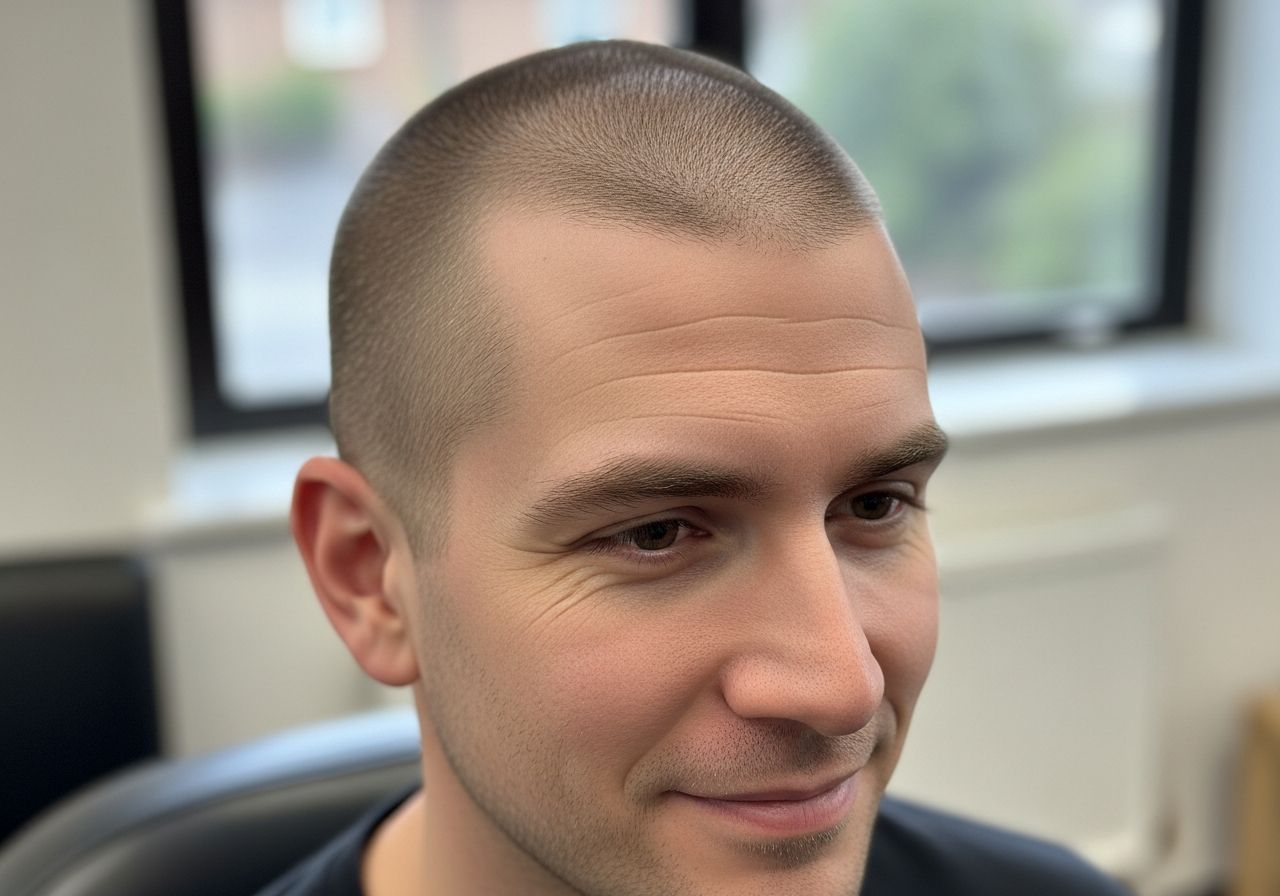
You've researched hair tattoos, you like what you see, and now you're wondering whether your specific situation actually qualifies. That's exactly the right question to ask before you book anything. This article gives you a clear self-assessment framework, covering the scalp conditions, skin types, hair loss patterns, and medical factors that make someone a strong candidate for scalp micropigmentation, or the wrong one.
1. Your hair loss has stabilised
The single strongest predictor of a good long-term result is stable hair loss. If your pattern has been consistent for at least twelve months, SMP can be placed accurately because the practitioner is working with a fixed canvas. There is no guesswork about where the recession will go next.
If your hair loss is still actively progressing, the concern is not that SMP won't work; it's that pigment placed today may no longer match the visible hair loss pattern in two years' time. A reputable practitioner will ask you about progression before agreeing to treat you, not after.
2. You have male or female pattern baldness, or a defined alopecia diagnosis
SMP was developed primarily for androgenetic alopecia, the pattern baldness driven by DHT that affects at least 50% of men by age 50 and one in three women over a lifetime. It is also highly effective for alopecia areata, alopecia totalis, scarring alopecias, and chemotherapy-related hair loss.
Post-transplant scarring is another strong use case. Linear or diffuse scarring from strip harvesting can be camouflaged with targeted pigment placement, making SMP a natural complement to surgical hair restoration rather than a competitor to it. If you have a clear diagnosis in any of these categories, you are starting from a solid foundation.
3. Your scalp skin is in good health right now
SMP deposits medical-grade pigment into the upper dermal layer of your scalp. For that to heal cleanly and retain well, the skin receiving the pigment needs to be healthy at the time of treatment. Active acne, an open psoriasis flare, eczema, or dermatitis on the scalp are all contraindications, not permanent disqualifiers, but reasons to postpone until the condition is controlled.
Oily skin types tend to experience slightly faster fading than dry or mature skin, because higher sebum production accelerates epidermal turnover. That does not rule you out; it means you should factor in touch-up appointments every three to four years rather than every five to six.
4. You don't have a history of keloid scarring
This one is non-negotiable. Keloid-prone skin, which produces excessive scar tissue in response to any wound including a needle puncture, is a firm contraindication for SMP. The needle cycling involved in hair replication creates thousands of micro-entry points per session, and on keloid-prone skin each one carries a real risk of raised, thickened scarring that is difficult to treat and not easily reversed.
If you have had a piercing, a small cut, or a previous tattoo that produced a raised, spreading scar, mention it clearly at your consultation. A good practitioner will not proceed without assessing your scar history first.
5. You have realistic expectations about what SMP actually does
Scalp micropigmentation does not stimulate hair regrowth, affect hair follicles, or reverse any underlying cause of hair loss. It creates the visual impression of closely cropped hair follicles by reducing the contrast between your scalp and your existing hair. Understanding that distinction matters, because it shapes whether you will be satisfied with your result.
Candidates who are clear-eyed about this tend to report very high satisfaction. A 2025 case series of ten patients recorded mean satisfaction scores of 2.7 out of 3, with 85.7% of androgenetic patients reporting they were very satisfied. Those outcomes track directly with accurate expectations set before treatment, not after.
Two situations that typically rule someone out: active autoimmune conditions managed with immunosuppressant medications, which affect healing and pigment retention unpredictably, and certain blood-thinning medications that increase bleeding during treatment and compromise pigment deposit accuracy. Always disclose your full medication list at consultation. It is not a bureaucratic formality; it is the difference between a result that heals well and one that does not.
Frequently Asked Questions
Is scalp micropigmentation suitable for women with diffuse thinning rather than complete baldness?
Yes. SMP works well for female pattern hair loss, where the goal is increased density rather than hairline recreation. Pigment is deposited between existing hairs to reduce scalp visibility. The technique is the same; the design intent is different. A good practitioner will assess your current density and map out realistic coverage before committing to a plan.
Can I have a hair tattoo if I have scalp psoriasis?
Not during an active flare. Psoriasis is listed as a contraindication for SMP when the scalp is inflamed or broken. If your psoriasis is well controlled and your scalp is clear at the time of treatment, most practitioners will assess you on a case-by-case basis. Always disclose your diagnosis and current treatment to your practitioner before booking.
How long does scalp micropigmentation last before it needs a touch-up?
Results typically last three to eight years depending on skin type, sun exposure, and aftercare habits. Oily skin and high UV exposure accelerate fading. Applying SPF 30 to 50 daily after the 30-day healing period is one of the most effective ways to protect longevity. Most clients return for a touch-up every three to four years.
What scalp conditions make someone unsuitable for SMP?
Active acne on the scalp, psoriasis flare-ups, eczema, dermatitis, and keloid-prone skin are the main contraindications for SMP. Keloid scarring is a firm contraindication because needle-based treatment carries a high risk of producing raised, thickened scar tissue. The other conditions are typically temporary; treatment can proceed once the scalp has returned to a stable, healthy state.
Does scalp micropigmentation work on scar tissue from a previous hair transplant?
Yes, and it is one of the more common reasons people seek SMP. Linear scarring from strip harvesting and diffuse scarring from follicular unit extraction can both be camouflaged effectively with targeted pigment placement. Scar tissue absorbs pigment differently from normal skin, so your practitioner may adjust needle depth and dot density to account for that variation.
Frequently asked questions
- Is scalp micropigmentation suitable for women with diffuse thinning rather than complete baldness?
- Yes. SMP works well for female pattern hair loss, where the goal is increased density rather than hairline recreation. Pigment is deposited between existing hairs to reduce scalp visibility. The technique is the same; the design intent is different. A good practitioner will assess your current density and map out realistic coverage before committing to a plan.
- Can I have a hair tattoo if I have scalp psoriasis?
- Not during an active flare. Psoriasis is listed as a contraindication for SMP when the scalp is inflamed or broken. If your psoriasis is well controlled and your scalp is clear at the time of treatment, most practitioners will assess you on a case-by-case basis. Always disclose your diagnosis and current treatment to your practitioner before booking.
- How long does scalp micropigmentation last before it needs a touch-up?
- Results typically last three to eight years depending on skin type, sun exposure, and aftercare habits. Oily skin and high UV exposure accelerate fading. Applying SPF 30 to 50 daily after the 30-day healing period is one of the most effective ways to protect longevity. Most clients return for a touch-up every three to four years.
- What scalp conditions make someone unsuitable for SMP?
- Active acne on the scalp, psoriasis flare-ups, eczema, dermatitis, and keloid-prone skin are the main contraindications for SMP. Keloid scarring is a firm contraindication because needle-based treatment carries a high risk of producing raised, thickened scar tissue. The other conditions are typically temporary; treatment can proceed once the scalp has returned to a stable, healthy state.
- Does scalp micropigmentation work on scar tissue from a previous hair transplant?
- Yes, and it is one of the more common reasons people seek SMP. Linear scarring from strip harvesting and diffuse scarring from follicular unit extraction can both be camouflaged effectively with targeted pigment placement. Scar tissue absorbs pigment differently from normal skin, so your practitioner may adjust needle depth and dot density to account for that variation.
More on Hair Tattoo (KW)
Hair Tattoo (KW)
What actually happens to your scalp in the weeks after SMP
Wondering why your scalp looks darker one week and lighter the next? Here's the real week-by-week SMP healing timeline, from scabbing to final colour settling.
Hair Tattoo (KW)
SMP or hair transplant: 5 questions that decide which one is right for you in the UK
Weighing up scalp micropigmentation against a hair transplant? Here's how they compare on cost, downtime and results, so you can choose with confidence.
Hair Tattoo (KW)
What to expect from your scalp micropigmentation appointments: sessions, gaps and healing explained
Most clients need 2–4 SMP sessions spaced 7–14 days apart. Here's exactly what happens at each appointment and why the gaps matter.