5 things alopecia areata patients need to know about SMP
SMP for alopecia areata typically involves two to three sessions that deposit medical-grade pigment dots to camouflage patchy hair loss on the scalp.
Scalp Studio
Updated 20 July 2026
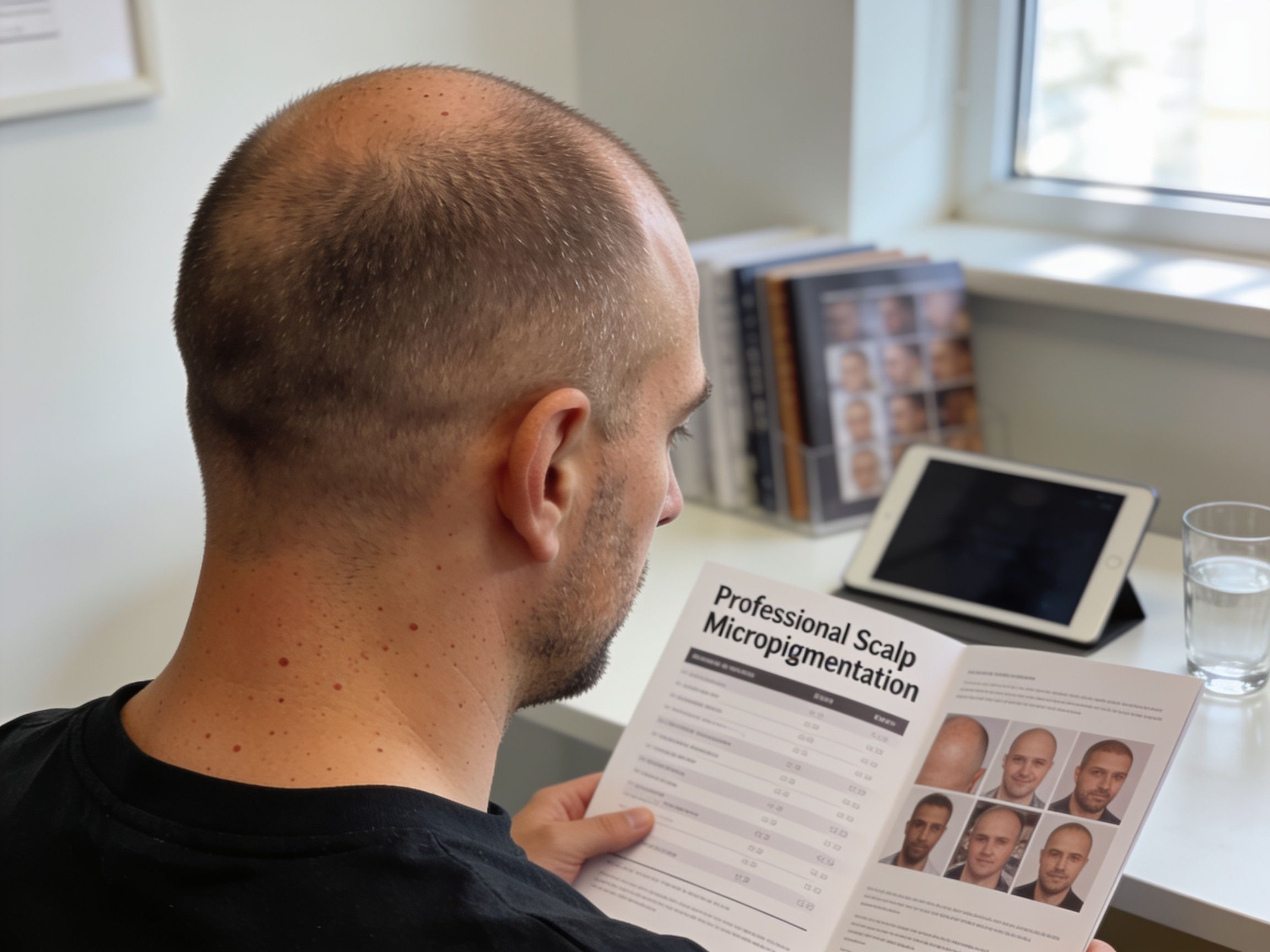
Alopecia areata doesn't follow a script, and that is exactly what makes planning treatment for it so different from standard hair loss. This article walks you through what a realistic SMP journey looks like when patches are the problem: how many sessions to expect, how healing unfolds week by week, and what happens if new patches appear after treatment is complete.
1. The pre-consultation assessment is more detailed than you might expect
Before any pigment touches your scalp, a thorough assessment maps your existing patches, your hair's natural density, and the colour and tone of any remaining hair. For alopecia areata specifically, the practitioner also needs to understand how active your condition currently is.
Active alopecia, where patches are still appearing or expanding, changes the treatment plan significantly. Working into actively inflamed or unstable areas risks poor pigment retention and uneven results. Most practitioners will discuss your recent patch history, any medications you are taking, and whether your condition has been stable for at least a few months before committing to a start date.
2. Patch progression means the treatment plan has to stay flexible
SMP for alopecia areata does not follow the same linear roadmap as treating male pattern baldness. Because new patches can appear unpredictably, a good practitioner designs sessions with future adaptability in mind, rather than treating the scalp as a finished canvas after the first session.
In practical terms, this means pigment dot density is built up gradually across sessions, starting at roughly 40 dots per cm² and increasing towards 80 to 100 dots per cm² as results are assessed. Hairline borders use a fine 0.2 mm single-point needle for precision, while broader patchy areas across the vertex or crown are treated with a 0.25 mm triple-point needle to build density more efficiently. Leaving some flexibility in the design means new patches can be blended in at a later touch-up without the overall result looking inconsistent.
3. Most alopecia areata cases need two to three sessions, not one
SMP for alopecia areata is almost never a single-session procedure. Standard treatment involves two to three sessions spaced several weeks apart, allowing the scalp to heal between each visit and the pigment to settle before more density is added.
Each session lasts between one and five hours depending on the area being treated and the complexity of the patch pattern. With over 40,000 pigment dots possible per session, there is no rushing the process. The gap between sessions also gives both patient and practitioner the opportunity to assess how well the pigment has held before deciding how much further work is needed. Some alopecia totalis cases, where there is complete hair loss across the scalp, may require additional sessions beyond the typical range.
4. Healing follows a predictable week-by-week timeline
Understanding the healing stages prevents unnecessary concern when the result looks different in week one than it will at week four. In the first one to four days, some redness is normal and the pigment will appear noticeably darker than the finished result. Water on the scalp, shampoo, sweating and shaving should all be avoided during this window.
Between days five and ten, gentle washing can resume, though sun exposure should still be avoided. The pigment will begin to lighten slightly as the outer epidermal layer sheds naturally. This is normal and expected, not a sign that the treatment has not worked. From day ten onwards, SPF 30 to 50 sunscreen applied to the scalp becomes part of the daily routine. Full healing takes approximately 30 days, at which point the settled result gives a reliable indication of what density work remains for the next session. Swimming pools should be avoided for 28 days after the final session.
5. Touch-ups after new patches appear are a routine part of the process
One of the most common questions from alopecia areata patients is what happens if a new patch appears after treatment is complete. The honest answer is that this outcome is anticipated, not a failure of the original work.
Touch-up appointments are typically needed every three to five years as pigment fades naturally through epidermal turnover, sun exposure and normal skin ageing. For alopecia areata patients, an earlier touch-up may be warranted if a significant new patch develops in a visible area. Factors that accelerate fading include oily skin, high sun exposure and faster cellular metabolism, while regular SPF use and drier skin types support longer-lasting results. Scarring alopecia cases tend to show greater fading than androgenetic ones, so if hair loss involves any scarring element, that should be factored into long-term planning.
SMP does not stop alopecia areata from progressing, and it will not stimulate any regrowth. What it does provide is consistent, predictable coverage that adapts over time, so that the scalp visible to the world reflects the confidence you want to project, regardless of where your condition stands on any given day.
Frequently Asked Questions
Is SMP suitable for alopecia areata if my patches are still changing?
SMP can be performed on alopecia areata patients, but most practitioners recommend waiting until patches have been stable for at least a few months. Treating actively inflamed or rapidly changing areas risks uneven pigment retention. A thorough pre-consultation assessment will help determine whether your condition is at a suitable stage to begin.
How many SMP sessions will I need for patchy hair loss?
Most alopecia areata patients require two to three scalp micropigmentation sessions, spaced several weeks apart. Sessions allow pigment density to be built up gradually and give the scalp time to heal between visits. Cases involving more extensive patchy hair loss or scarring alopecia may require additional sessions beyond the standard range.
Will the healed SMP result look natural alongside remaining hair?
Yes. When matched carefully to your existing hair colour and tone, medical micropigmentation creates replicated follicle dots that blend with surrounding hair. Pigment appears darker immediately after each session and lightens during the 30-day healing period. The settled result at full healing gives the most accurate representation of the finished appearance.
What happens to my SMP result if a new alopecia patch appears later?
New patches appearing after treatment are common with alopecia areata and are managed through touch-up appointments. Practitioners design the initial treatment with future adaptability in mind, so new areas can be blended in without disrupting the overall result. Touch-ups are typically needed every three to five years regardless, so new patch coverage can be incorporated at that stage.
Are there any scalp conditions that would prevent me from having SMP?
Active scalp acne, psoriasis flare-ups, eczema and keloid-prone skin are recognised contraindications for scalp micropigmentation. If your alopecia areata is accompanied by scalp inflammation or active skin conditions, treatment should be postponed until those are well managed. Your practitioner will assess your scalp at consultation and advise on timing accordingly.
Frequently asked questions
- Is SMP suitable for alopecia areata if my patches are still changing?
- SMP can be performed on alopecia areata patients, but most practitioners recommend waiting until patches have been stable for at least a few months. Treating actively inflamed or rapidly changing areas risks uneven pigment retention. A thorough pre-consultation assessment will help determine whether your condition is at a suitable stage to begin.
- How many SMP sessions will I need for patchy hair loss?
- Most alopecia areata patients require two to three scalp micropigmentation sessions, spaced several weeks apart. Sessions allow pigment density to be built up gradually and give the scalp time to heal between visits. Cases involving more extensive patchy hair loss or scarring alopecia may require additional sessions beyond the standard range.
- Will the healed SMP result look natural alongside remaining hair?
- Yes. When matched carefully to your existing hair colour and tone, medical micropigmentation creates replicated follicle dots that blend with surrounding hair. Pigment appears darker immediately after each session and lightens during the 30-day healing period. The settled result at full healing gives the most accurate representation of the finished appearance.
- What happens to my SMP result if a new alopecia patch appears later?
- New patches appearing after treatment are common with alopecia areata and are managed through touch-up appointments. Practitioners design the initial treatment with future adaptability in mind, so new areas can be blended in without disrupting the overall result. Touch-ups are typically needed every three to five years regardless, so new patch coverage can be incorporated at that stage.
- Are there any scalp conditions that would prevent me from having SMP?
- Active scalp acne, psoriasis flare-ups, eczema and keloid-prone skin are recognised contraindications for scalp micropigmentation. If your alopecia areata is accompanied by scalp inflammation or active skin conditions, treatment should be postponed until those are well managed. Your practitioner will assess your scalp at consultation and advise on timing accordingly.
More on Alopecia
Alopecia
SMP or a wig? 5 things women with alopecia should weigh up before choosing
Comparing SMP and wigs for alopecia? Here's what really differs in cost, upkeep, swimming, showering and how convincing each option looks up close.
Alopecia
What scalp micropigmentation actually costs when you're treating alopecia in the UK
Wondering what SMP for alopecia really costs in the UK? Here's how patch size, session count and clinic location shape the final price, no guesswork needed.
Alopecia
What alopecia areata clients can realistically expect from scalp micropigmentation
Patchy alopecia and SMP: see what healed results actually look like session by session, and where hair replication has honest limits.