Alopecia areata and SMP: what the results actually look like
SMP for alopecia areata uses medical-grade pigment to replicate hair follicles across bare patches, reducing visible contrast and restoring the appearance of density.
Scalp Studio
Updated 6 August 2026
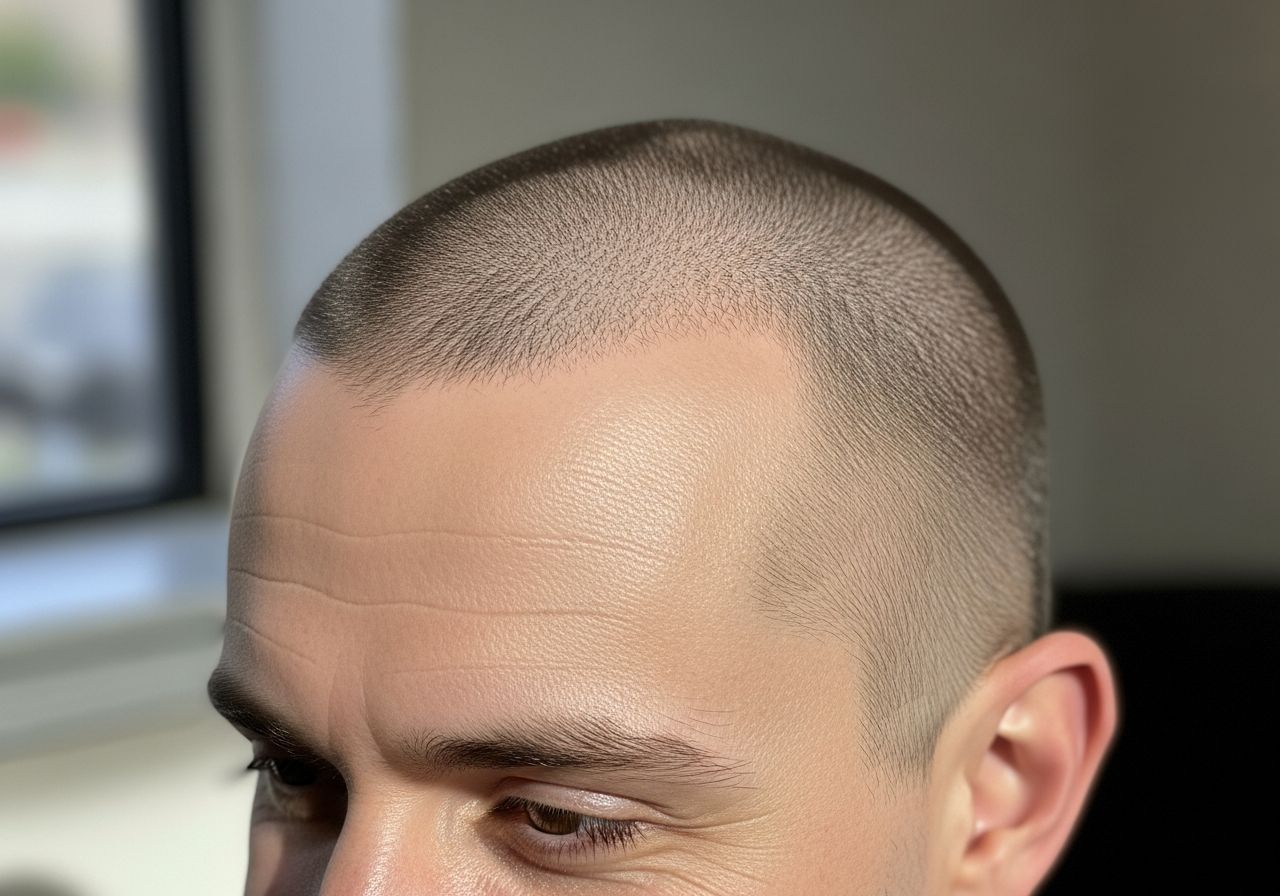
You have patches. Some stay put for months; others shift, fade, or reappear somewhere new. You may be wondering whether scalp micropigmentation can actually work on hair loss this unpredictable, or whether the before-and-after photos you have seen online are telling the full story. This article walks you through what SMP for alopecia areata genuinely looks like, session by session, and where its limits are worth understanding before you commit.
What the healed result actually looks like against bare scalp
Alopecia areata creates patches of smooth, bare scalp surrounded by existing hair. That contrast, pale skin against dark or coloured hair, is exactly what SMP is designed to reduce. Medical-grade pigment is deposited into the upper dermis using fine needles, creating dots that mimic the visual impression of hair follicles rather than attempting to restore any actual growth.
On healed skin, a well-placed SMP dot sits at roughly 1.5 to 2 millimetres depth and measures around 1 millimetre in diameter. Against bare scalp, a correctly matched pigment reads as a stubble follicle. The goal is not to fool anyone at close range; it is to eliminate the stark tonal contrast that makes patches immediately visible. Most clients find that under normal social and professional lighting, patchy alopecia areata becomes significantly less noticeable after treatment.
Pigment colour matching is critical here. Practitioners use custom-blended pigments to approximate your natural hair tone, accounting for the fact that healed pigment reads slightly lighter than the freshly deposited shade. On fair skin with dark hair, this calibration demands real precision. On medium to darker skin tones, the margin for error is somewhat more forgiving, though accuracy still determines whether the result looks natural or flat.
What happens across each session
Most clients with alopecia areata need two to four sessions to reach a finished result, spaced roughly four to six weeks apart. The first session is intentionally conservative. Pigment density starts low, at around 40 dots per square centimetre, which allows the practitioner to assess how the skin holds the pigment during healing before committing to a denser application.
By the second session, the healed result from the first is visible and the practitioner can build density, moving towards 80 to 100 dots per square centimetre in the areas that need it most. This progressive build is deliberate. Depositing at full density immediately risks overcrowding if the skin retains pigment more aggressively than expected, which can produce a flat, unnatural-looking block of colour rather than the pointillist effect that reads as individual follicles.
For alopecia areata specifically, the practitioner also needs to blend the treated patches carefully into surrounding areas where existing hair is present. A 0.2 millimetre single-point needle is typically used at hairline borders and patch edges to create soft, graduated transitions, while a slightly wider needle configuration handles the central areas of each patch. That zone-specific approach is what separates a believable result from one that looks applied.
The honest limitations when patches are unpredictable
Alopecia areata is autoimmune-driven and inherently unpredictable. Patches can stabilise, expand, merge, or partially regrow, sometimes all within the same year. This is where SMP for alopecia areata diverges from its application in androgenetic hair loss, where the pattern is largely fixed.
If a treated patch partially regrows after SMP, the returning hair typically grows through the pigmented area without issue. In most cases, the new growth actually enhances the result, since real hair and replicated follicle dots together look denser and more convincing than either alone. That is a genuine upside worth knowing.
The more complex scenario is active progression, where patches are still expanding at the time of treatment. Waiting for a stable period before committing to SMP is strongly advisable. Treating a patch that continues to enlarge means the border of the treated area may eventually sit inside a newly exposed section of bare scalp, creating a visible edge. No practitioner can pigment ahead of an advancing patch without that risk.
Touch-up sessions every four to six years are standard for SMP generally. For alopecia areata clients, the schedule may be less predictable, particularly if the condition fluctuates and patches shift over time. Pigment fades naturally due to epidermal turnover, sun exposure, and immune activity. Consistent SPF 30 to 50 application on the scalp after the 30-day healing period genuinely extends how long each treatment lasts. Clients with oilier skin or higher sun exposure typically see earlier fading and should factor that into their planning.
Who gets the best results and who should wait
The strongest candidates for alopecia areata SMP are those with stable, long-standing patches that have not shifted in at least six months. Clients with alopecia totalis, where all scalp hair is absent, can also achieve strong outcomes, since the entire scalp becomes the canvas and there is no existing hair density to match or blend with.
Keloid-prone skin is a contraindication. Active scalp psoriasis, eczema flare-ups, or acne across the treatment area also rule out proceeding until the skin has settled. These are not bureaucratic cautions; uneven skin texture and inflammation directly affect how pigment deposits and heals, and results on compromised skin are unreliable.
Hair replication for alopecia patches works best when expectations are grounded. SMP does not affect the underlying autoimmune mechanism, stimulate follicle activity, or prevent future patches. What it does, reliably, is reduce the visible contrast that makes alopecia areata so difficult to conceal, and for most clients that reduction is meaningful enough to be genuinely life-changing.
Frequently Asked Questions
Can SMP cover alopecia areata patches if my hair loss is still actively spreading?
Treating actively spreading alopecia areata patches with SMP carries real risk. If the patch continues to enlarge after treatment, the pigmented area may sit inside a new expanse of bare scalp, creating a visible border. Most practitioners recommend waiting for at least six months of stability before proceeding with hair replication on affected areas.
How many SMP sessions does alopecia areata typically require?
Most alopecia areata clients need two to four SMP sessions, spaced four to six weeks apart. The first session deposits pigment conservatively at around 40 dots per square centimetre to assess healing. Subsequent sessions build density progressively, blending patch edges into surrounding hair for a natural alopecia areata scalp micropigmentation result.
What happens if hair regrows in an area that has already been treated with SMP?
Regrowing hair typically grows through the pigmented area without complication. In most cases, returning hair actually improves the result, as real follicles and replicated pigment dots together create a more convincing density. This is one of the more reassuring aspects of SMP for alopecia areata before and after the treatment period.
How long do SMP results last on alopecia areata patches?
SMP results generally last four to eight years before fading requires a touch-up. For alopecia areata clients, longevity depends on sun exposure, skin type, and whether patches remain stable. Applying SPF 30 to 50 to the scalp daily after the 30-day healing period is the single most effective way to extend how long results hold.
Is SMP suitable for alopecia totalis, where all scalp hair is absent?
Yes, alopecia totalis is a strong candidate scenario for SMP. When no existing hair is present, the practitioner works across the entire scalp without needing to blend into surrounding hair, which actually simplifies density and tone matching. Pigment is applied to replicate a full shaved-head appearance, and patient satisfaction in total-loss cases is consistently high.
Frequently asked questions
- Can SMP cover alopecia areata patches if my hair loss is still actively spreading?
- Treating actively spreading alopecia areata patches with SMP carries real risk. If the patch continues to enlarge after treatment, the pigmented area may sit inside a new expanse of bare scalp, creating a visible border. Most practitioners recommend waiting for at least six months of stability before proceeding with hair replication on affected areas.
- How many SMP sessions does alopecia areata typically require?
- Most alopecia areata clients need two to four SMP sessions, spaced four to six weeks apart. The first session deposits pigment conservatively at around 40 dots per square centimetre to assess healing. Subsequent sessions build density progressively, blending patch edges into surrounding hair for a natural alopecia areata scalp micropigmentation result.
- What happens if hair regrows in an area that has already been treated with SMP?
- Regrowing hair typically grows through the pigmented area without complication. In most cases, returning hair actually improves the result, as real follicles and replicated pigment dots together create a more convincing density. This is one of the more reassuring aspects of SMP for alopecia areata before and after the treatment period.
- How long do SMP results last on alopecia areata patches?
- SMP results generally last four to eight years before fading requires a touch-up. For alopecia areata clients, longevity depends on sun exposure, skin type, and whether patches remain stable. Applying SPF 30 to 50 to the scalp daily after the 30-day healing period is the single most effective way to extend how long results hold.
- Is SMP suitable for alopecia totalis, where all scalp hair is absent?
- Yes, alopecia totalis is a strong candidate scenario for SMP. When no existing hair is present, the practitioner works across the entire scalp without needing to blend into surrounding hair, which actually simplifies density and tone matching. Pigment is applied to replicate a full shaved-head appearance, and patient satisfaction in total-loss cases is consistently high.
More on Alopecia
Alopecia
SMP or a wig? 5 things women with alopecia should weigh up before choosing
Comparing SMP and wigs for alopecia? Here's what really differs in cost, upkeep, swimming, showering and how convincing each option looks up close.
Alopecia
What scalp micropigmentation actually costs when you're treating alopecia in the UK
Wondering what SMP for alopecia really costs in the UK? Here's how patch size, session count and clinic location shape the final price, no guesswork needed.
Alopecia
5 things to know before starting scalp micropigmentation for alopecia areata
Patchy hair loss from alopecia areata needs a different SMP approach. Here's exactly what to expect across every stage, from assessment to touch-ups.