SMP versus hair transplant: how do you choose?
Scalp micropigmentation suits men who want an immediate, low-downtime solution to visible thinning or baldness, while a hair transplant suits men with enough donor hair who want a surgical change to their hairline or density. SMP creates the appearance of a shaved head or added density using pigment; it does not regrow hair. A transplant moves your own follicles and can produce genuine new growth, but it costs more, takes longer to heal, and depends on donor supply.
Scalp Studio
Updated 25 August 2026
You've done the research, you know your hair isn't coming back on its own, and now you're stuck between two very different fixes. One involves pigment and a needle device; the other involves surgery and months of waiting to see results. Here's how scalp micropigmentation and a hair transplant actually compare, so you can stop going round in circles.
Scalp micropigmentation (SMP) is not better or worse than a hair transplant in every case; it depends entirely on your donor hair, your budget, and what result you actually want to see in the mirror. SMP deposits medical-grade pigment into the scalp to create the visual impression of a closely shaved head or denser hair; it doesn't stimulate regrowth or affect existing follicles. A hair transplant, by contrast, physically relocates your own hair follicles from a donor area to a thinning or bald one, so the hair that grows is genuinely yours.
What each procedure actually gives you
SMP works by depositing pigment at the epidermal to upper dermal interface, roughly 1.5 to 2 millimetres deep, using a stippling technique that mimics individual hair follicles. Dot density builds across sessions, from around 40 dots per square centimetre early on up to 80 to 100 dots per square centimetre by the final session. The result is a scalp that reads as stubble or added density from across a room and up close, not a full head of new hair.
FUE (follicular unit extraction) and FUT (follicular unit transplantation) both remove hair-bearing follicles from a donor zone, usually the back and sides, and implant them into balding areas. FUE takes individual follicles one at a time, leaving tiny dot scars; FUT removes a strip of scalp, leaving a linear scar, but can move more grafts in one sitting. Both rely on you having enough healthy donor hair to begin with, which SMP doesn't require at all.
Cost, sessions and what you're actually paying for
SMP is typically delivered across two to four sessions, each lasting one to five hours, spaced several weeks apart to let the scalp settle and the pigment take properly. Total cost is usually quoted per session rather than per graft, and most men should expect touch-ups every four to six years to keep density looking sharp, not because the original work fails.
A hair transplant is priced per graft, and a full session can involve thousands of grafts depending on the size of the balding area. That per-graft cost, combined with surgical fees and the potential need for a second procedure later, generally puts transplants well above SMP for equivalent coverage. Neither procedure is covered by insurance, so this is entirely out of pocket either way.
Downtime and how fast you see a result
This is where the two diverge sharply. With SMP, initial redness settles within two to three days, and you're looking at a fully healed scalp within about 30 days. Aftercare is straightforward: no water on the scalp for the first four days, no shampoo or sweating, gentle washing from day five, and SPF once you hit day ten. You can see your new density immediately after each session, with the final look settling in over the following weeks.
A transplant asks for more patience. Swelling and scabbing in the recipient area typically resolve within two weeks, but transplanted follicles shed within the first month, a normal part of the process, before new growth starts appearing around three to four months later. Full results aren't visible until nine to twelve months after surgery. If you want to see a finished result before a wedding, a job change, or any date on the calendar, that timeline matters.
Who suits which option
SMP works well for men with diffuse thinning, early to advanced male pattern baldness, alopecia areata or totalis, scarring alopecia, or scars from a previous transplant that didn't heal cleanly. It's also the only realistic option for men whose donor hair is too limited or too fine to support a transplant. Because male pattern baldness affects at least half of men by age 50, driven by DHT shortening the follicle growth cycle, a large number of men eventually reach a stage where donor supply simply won't stretch to cover the balding area with surgery alone.
A transplant suits men who still have a strong, dense donor zone and want an actual change in hair volume rather than the appearance of it. Some men combine both: a transplant to rebuild density in one area, then SMP layered in to disguise scarring, camouflage thinning between transplanted grafts, or add density where the donor area couldn't fully deliver. That combination approach is increasingly common precisely because it plays to what each technique is good at.
Longevity and ongoing maintenance
SMP results typically last four to eight years before fading gradually, mostly due to natural epidermal turnover and sun exposure, at which point a touch-up restores the original density. Men with oilier skin or high sun exposure tend to see faster fading; consistent SPF 30 to 50 use after the initial healing period noticeably extends how long results hold their depth of colour.
A transplant, once follicles have taken and matured, is generally considered a one-time procedure for that donor supply, though ongoing hair loss in untreated areas can continue and may eventually call for a second session or SMP to blend things later. Neither option is a cure for baldness or a way of regrowing hair that's already gone; both are ways of managing how visible that hair loss is, just through completely different mechanisms.
Frequently Asked Questions
Is SMP or a hair transplant better for men?
Neither is universally better; it depends on your donor hair and goals. SMP suits men wanting fast, low-downtime density without surgery, while a transplant suits men with strong donor hair who want a physical change in coverage. Many men also combine both for the best overall result.
Does scalp micropigmentation look like real hair?
SMP creates the visual impression of a closely shaved head or added density using thousands of pigment dots that mimic follicles, not actual growing hair. Up close and from a distance it reads convincingly as stubble or density, but it doesn't produce real strands or regrowth.
How long does hair replication from SMP last compared to a transplant?
SMP typically lasts four to eight years before a touch-up is needed, as pigment gradually fades through natural skin turnover and sun exposure. A hair transplant, once follicles establish, generally lasts long-term, though hair loss can continue in untreated areas over time.
Can you get SMP after a hair transplant that didn't heal well?
Yes. SMP is commonly used to camouflage scarring from a previous FUE or FUT procedure and to add density between transplanted grafts that didn't achieve full coverage. It's one of the most common reasons men combine both procedures.
Is FUE or FUT a better option than SMP for advanced baldness?
For advanced baldness, donor hair supply often becomes too limited to support FUE or FUT effectively, making SMP the more realistic option for full coverage. Transplants work best when there's still a strong, dense donor zone to draw from.
Frequently asked questions
- Is SMP or a hair transplant better for men?
- Neither is universally better; it depends on your donor hair and goals. SMP suits men wanting fast, low-downtime density without surgery, while a transplant suits men with strong donor hair who want a physical change in coverage. Many men also combine both for the best overall result.
- Does scalp micropigmentation look like real hair?
- SMP creates the visual impression of a closely shaved head or added density using thousands of pigment dots that mimic follicles, not actual growing hair. Up close and from a distance it reads convincingly as stubble or density, but it doesn't produce real strands or regrowth.
- How long does hair replication from SMP last compared to a transplant?
- SMP typically lasts four to eight years before a touch-up is needed, as pigment gradually fades through natural skin turnover and sun exposure. A hair transplant, once follicles establish, generally lasts long-term, though hair loss can continue in untreated areas over time.
- Can you get SMP after a hair transplant that didn't heal well?
- Yes. SMP is commonly used to camouflage scarring from a previous FUE or FUT procedure and to add density between transplanted grafts that didn't achieve full coverage. It's one of the most common reasons men combine both procedures.
- Is FUE or FUT a better option than SMP for advanced baldness?
- For advanced baldness, donor hair supply often becomes too limited to support FUE or FUT effectively, making SMP the more realistic option for full coverage. Transplants work best when there's still a strong, dense donor zone to draw from.
More on Male Density
Male Density
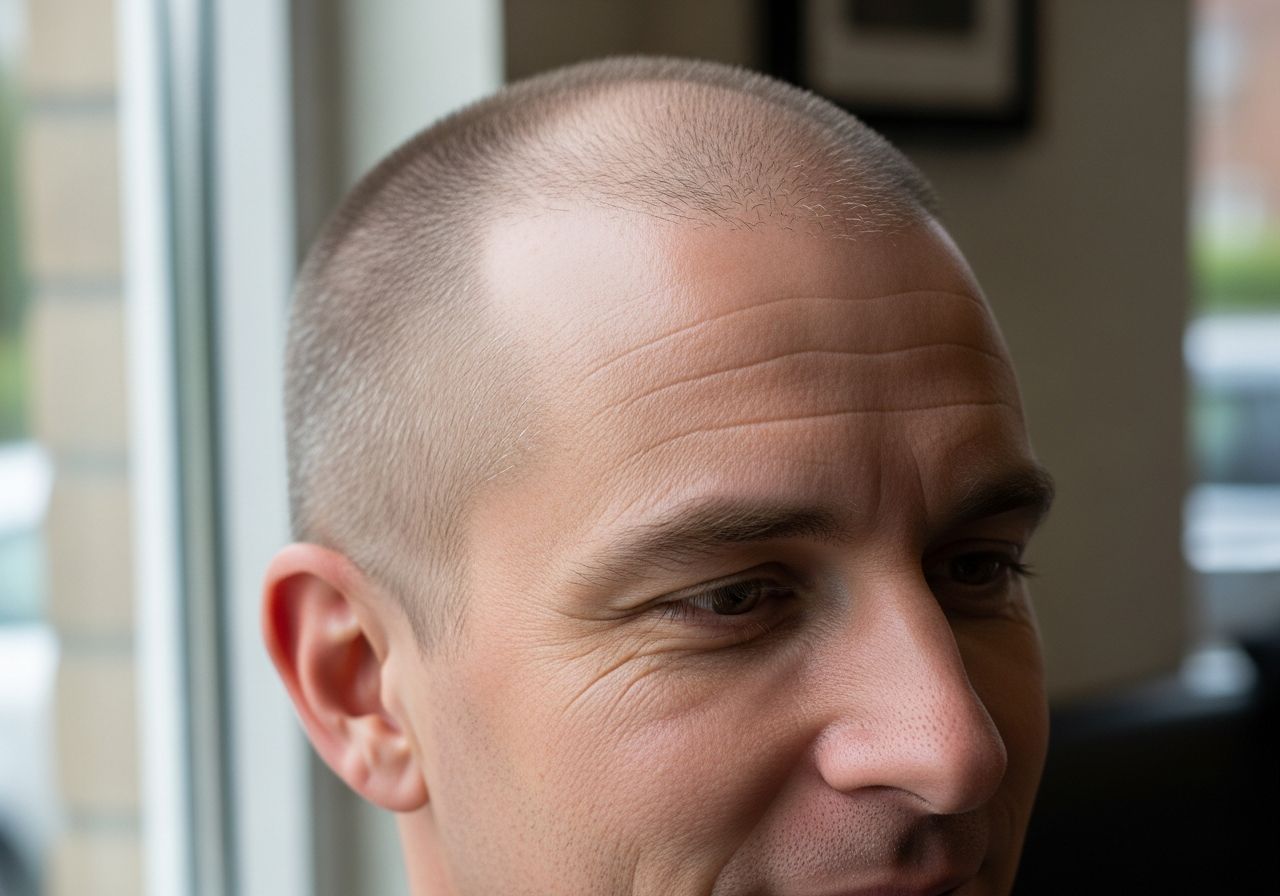
Thinning hair in men: can scalp micropigmentation actually make it look denser?
Thinning hair men worry SMP will look fake. Here's exactly how many sessions it takes, what healed results look like, and who's a genuine candidate.
Male Density
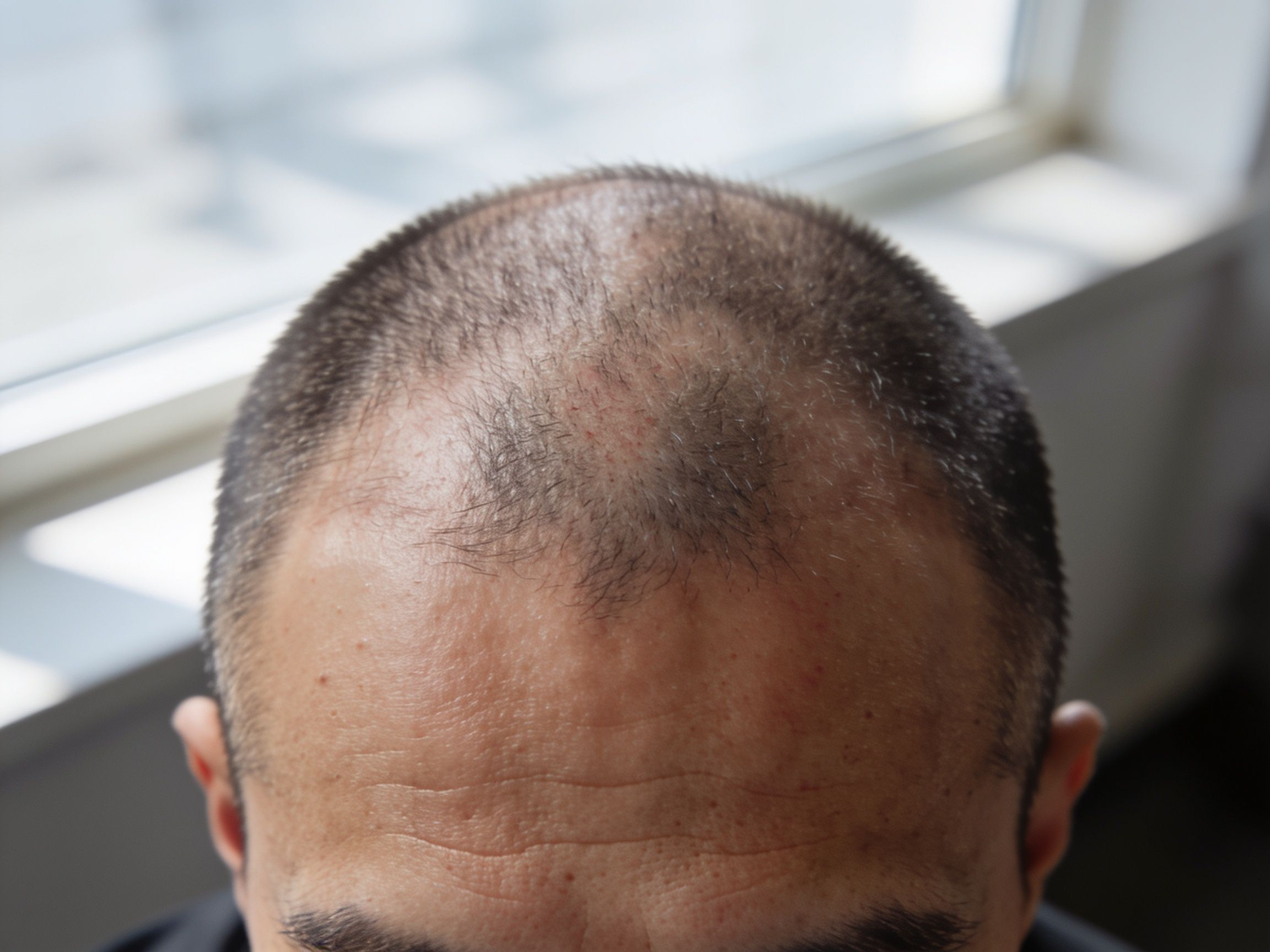
What to do after a scalp micropigmentation session to protect your results
Protect your SMP investment with the right aftercare. Exact timelines for washing, sun exposure, sweating and products — so your pigment heals cleanly.
Male Density
How long does scalp micropigmentation really last for men, and when do you actually need a touch-up?
SMP for male density lasts 3–8 years before fading shows. Learn which factors speed up colour loss and what a refresh session actually involves.