Does scalp micropigmentation really fix the look of thinning hair?
Yes, scalp micropigmentation for thinning hair in men creates the visual density of fuller hair by depositing tiny pigment dots between existing strands, closing the gap between hair and scalp. It doesn't regrow hair or stop hair loss progressing. Most men need two to four sessions over several weeks, with results typically lasting four to eight years before a touch-up is needed.
Scalp Studio
Updated 12 August 2026
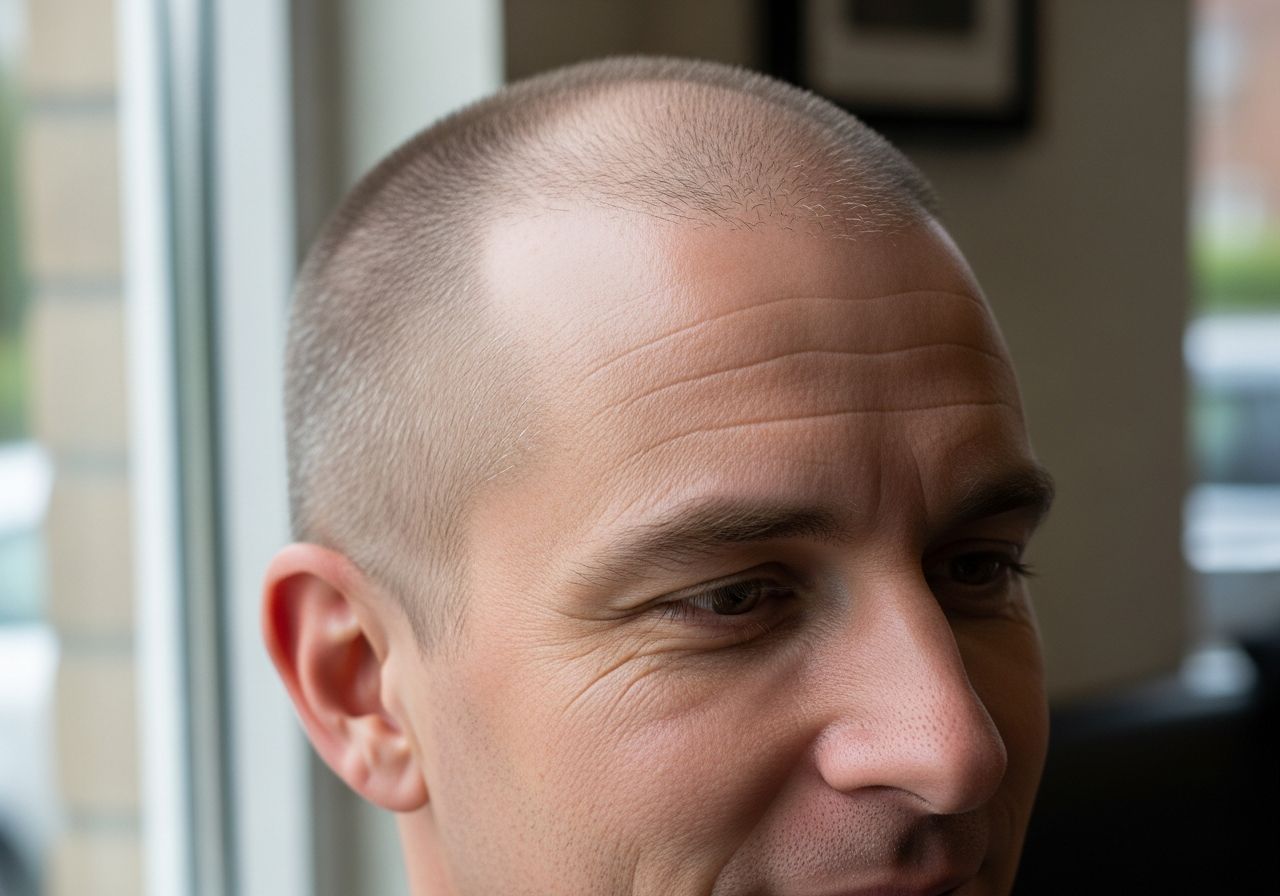
Your hair is still there, it's just not doing the job it used to. That gap between what you see in the mirror and what you want to see is exactly what brings most men to research this. This piece explains how the treatment works on thinning (not bald) scalps, how many sessions you'll actually need, and whether you're the right candidate for it.
Scalp micropigmentation for thinning hair in men works by depositing thousands of tiny pigment dots between your existing strands, closing the visual gap between scalp and hair so the overall effect reads as denser, thicker coverage. It's a camouflage technique, not a treatment for the hair loss itself. The distinction matters more than most clinics let on, so it's worth explaining properly below.
What SMP actually does to thinning hair, and what it doesn't do
SMP uses an electric needle device to place pigment at the epidermal to upper dermal junction, roughly 1.5 to 2 millimetres deep, in a stippled pattern that mimics individual follicles. On a fully bald scalp, this creates the look of a close crop. On thinning hair, it works differently: the dots go into the gaps between your surviving strands, darkening the scalp beneath so the contrast between hair and skin shrinks dramatically.
That's the entire mechanism. It does not stimulate follicles, slow DHT-driven shedding, or regrow anything. If a clinic implies otherwise, walk away. What it does deliver, reliably, is the appearance of increased density, which for most men with early-to-moderate thinning is precisely what they're chasing. Male pattern hair loss affects at least half of men by age 50, driven by DHT shortening the growth cycle of each follicle, and SMP addresses the cosmetic result of that process rather than the process itself.
How many sessions male density work actually takes
Male density SMP typically runs to two or three sessions, occasionally four for larger areas or higher target density, spaced two to four weeks apart to let the scalp settle between visits. Each session lasts one to three hours depending on the area covered, with pigment dot density increased progressively: early sessions might place around 40 dots per square centimetre, building to 80 to 100 dots per square centimetre by the final pass.
The gradual build matters. Going too dark too fast on thinning hair (rather than a fully shaved scalp) risks a result that looks patchy or obviously artificial once the pigment settles. A practitioner working on diffuse thinning will typically use a finer needle, often a 0.2mm single-point tip around the hairline and a slightly heavier 0.25mm triple-point tip through the crown or mid-scalp, adjusting density zone by zone rather than applying one uniform pattern.
On cost: expect a session-based structure rather than one flat fee, with the total scaling to the number of sessions and the area treated. Focus on what you're paying for, namely longevity of four to eight years, rather than fixating on the headline figure, and ask any clinic to break the quote down by session before you book.
Freshly treated scalp versus fully healed result
Straight after a session, your scalp will look noticeably darker and slightly redder than the finished result you're aiming for. That's normal, and it's the single biggest reason men panic in week one. Pigment sits closer to the surface immediately after treatment and softens considerably as healing progresses.
Days 1 to 4: no water on the scalp, no shampoo, no sweating, no shaving. Days 5 to 10: gentle washing is fine, but keep the area out of direct sun. From day 10 onwards you can resume normal grooming, though SPF on the scalp becomes non-negotiable from this point forward. Swimming pools are off-limits for a full 28 days, and complete healing, where the pigment has settled to its true, softer tone, takes around a month.
The healed result on thinning hair should look like natural density, not a hairline drawn on top of skin. Redness typically fades within two to three days, and the dots you could see individually right after treatment blend into a uniform shadow beneath the surviving hair once fully settled.
Who's a strong candidate, and who should look elsewhere
Strong candidates: men with diffuse thinning, a receding hairline, or mild to moderate crown thinning who still have hair covering the treated area, since SMP works by darkening between strands rather than replacing them. It also suits men managing scarring from previous transplants, alopecia patches, or scalp scarring, where the goal is blending rather than full coverage.
Less suitable: men with active scalp acne, psoriasis flare-ups, eczema, or keloid-prone skin, all of which complicate healing and pigment retention. If you're still in the early stages of hair loss and hoping something might reverse it, SMP isn't that answer, and neither medication nor lifestyle changes will be replaced by it. For men already fully bald who want a shaved-head look rather than density camouflage, the technique and needle pattern used is different, and worth discussing separately with your practitioner.
If your priority is genuine hair regrowth rather than the appearance of density, a hair transplant is the alternative worth comparing directly, since it moves living follicles rather than camouflaging the scalp beneath them. SMP costs considerably less, involves no surgery, and carries a shorter recovery, but the two solve different problems, and a good practitioner will tell you plainly which one actually matches what you're trying to fix.
Frequently Asked Questions
How long does male density SMP last before it needs a touch-up?
Results typically last four to eight years before visible fading, depending on skin type, sun exposure and how quickly your skin naturally turns over pigment. Most men return for a touch-up every four to six years to refresh density rather than starting the process again from scratch.
Will SMP make my thinning hair look thicker or does it just darken the scalp?
It does both. The pigment dots sit between your existing strands, darkening the scalp beneath so the contrast between skin and hair shrinks, which reads visually as increased thickness even though no new hair has grown. The effect is cosmetic, not physiological.
Is SMP for hair loss in men regulated in the same way as tattoos?
SMP sits in a fragmented regulatory space, treated more like body art than a medical procedure in most jurisdictions. There's no universal licensing requirement specific to SMP, so checking a practitioner's experience, hygiene standards and portfolio of healed results matters more than assuming formal oversight exists.
Can SMP be combined with a hair transplant for better density?
Yes, many men use SMP to camouflage transplant scarring or to add density in areas where transplanted grafts haven't fully filled in. It's commonly used after transplant surgery to blend donor and recipient zones rather than as a standalone alternative to surgery.
What does thinning hair look like straight after an SMP session versus a month later?
Immediately after treatment, the scalp looks darker and slightly red, which settles within two to three days. Over the following month, pigment softens to a more natural tone as the skin heals fully, so the finished result looks considerably subtler than it does on treatment day.
Frequently asked questions
- How long does male density SMP last before it needs a touch-up?
- Results typically last four to eight years before visible fading, depending on skin type, sun exposure and how quickly your skin naturally turns over pigment. Most men return for a touch-up every four to six years to refresh density rather than starting the process again from scratch.
- Will SMP make my thinning hair look thicker or does it just darken the scalp?
- It does both. The pigment dots sit between your existing strands, darkening the scalp beneath so the contrast between skin and hair shrinks, which reads visually as increased thickness even though no new hair has grown. The effect is cosmetic, not physiological.
- Is SMP for hair loss in men regulated in the same way as tattoos?
- SMP sits in a fragmented regulatory space, treated more like body art than a medical procedure in most jurisdictions. There's no universal licensing requirement specific to SMP, so checking a practitioner's experience, hygiene standards and portfolio of healed results matters more than assuming formal oversight exists.
- Can SMP be combined with a hair transplant for better density?
- Yes, many men use SMP to camouflage transplant scarring or to add density in areas where transplanted grafts haven't fully filled in. It's commonly used after transplant surgery to blend donor and recipient zones rather than as a standalone alternative to surgery.
- What does thinning hair look like straight after an SMP session versus a month later?
- Immediately after treatment, the scalp looks darker and slightly red, which settles within two to three days. Over the following month, pigment softens to a more natural tone as the skin heals fully, so the finished result looks considerably subtler than it does on treatment day.
More on Male Density
Male Density
SMP or a hair transplant: which one actually suits your hair loss?
Weighing up SMP against FUE or FUT? Here's how cost, downtime and longevity compare, so you can pick the option that fits your stage of hair loss.
Male Density
What to do after a scalp micropigmentation session to protect your results
Protect your SMP investment with the right aftercare. Exact timelines for washing, sun exposure, sweating and products — so your pigment heals cleanly.
Male Density
How long does scalp micropigmentation really last for men, and when do you actually need a touch-up?
SMP for male density lasts 3–8 years before fading shows. Learn which factors speed up colour loss and what a refresh session actually involves.