5 factors that settle the SMP versus hair transplant question
Scalp micropigmentation suits people who want an immediate, low-risk illusion of density with no surgery, while a hair transplant suits those with enough donor hair who want an invasive procedure that relocates existing follicles. SMP costs less, heals faster and carries far lower risk, but it doesn't restore natural hair growth. A transplant can look completely natural in the right candidate, but it needs surgery, months of patience and realistic donor supply.
Scalp Studio
Updated 9 August 2026
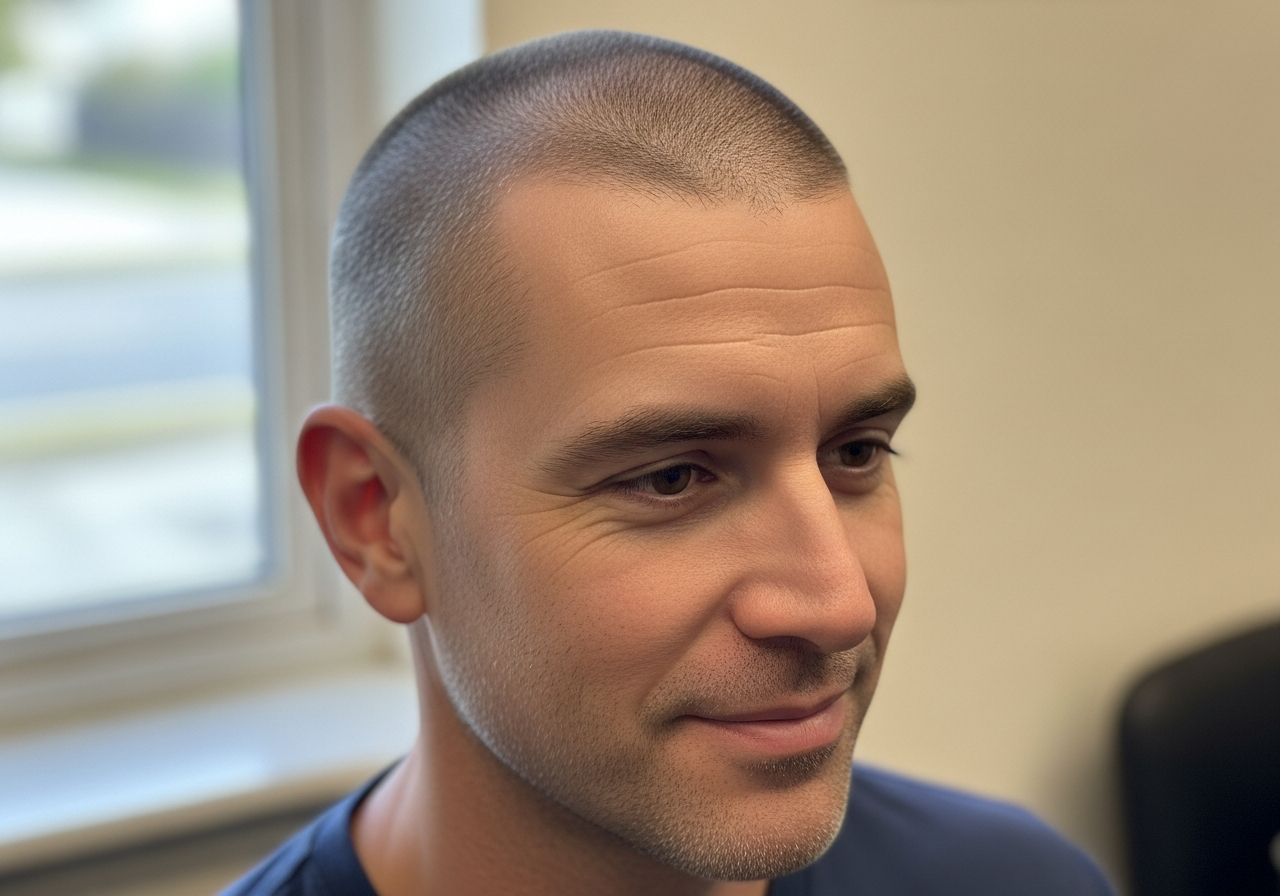
You've done the research, seen the before-and-after photos, and now you're stuck between two very different routes: a needle depositing pigment into your scalp, or surgery that moves hair follicles from one part of your head to another. Both promise to change how your hair loss looks. This article breaks down how they actually compare on cost, recovery, candidacy and realistic results, so you can walk away with a decision, not more confusion.
Scalp micropigmentation versus a hair transplant in the UK comes down to one core trade-off: SMP creates the visual impression of density through pigment, with no surgery and minimal downtime, while a transplant physically relocates your own hair follicles through an invasive procedure. Neither one regrows hair that's already gone. Understanding what each one actually does, rather than what it appears to do in photos, is the part most people skip before booking.
1. What each procedure actually does to your scalp
Scalp micropigmentation is cosmetic tattooing. A practitioner uses an electric needle device to deposit medical-grade pigment into the upper dermis, roughly 1.5 to 2 millimetres deep, in tiny dots that mimic the look of closely shaved hair follicles. It doesn't touch your existing follicles or stimulate anything underneath the skin. It's camouflage, applied with genuine skill.
A hair transplant is surgery. Follicles are removed from a donor area, usually the back or sides of the scalp where hair is genetically resistant to thinning, and implanted into the balding zone. The follicles are alive and will keep growing hair for as long as they would have grown it in their original location. That's the fundamental difference: one is an optical effect, the other is a relocation of living tissue.
2. Cost breaks down very differently across sessions
SMP is typically delivered across two to four sessions, each lasting one to five hours, with pigment density built up gradually from around 40 dots per square centimetre in early sessions to 80 to 100 dots per square centimetre by the final one. Total cost across the full course usually lands in a bracket most people find far more manageable than surgery, and touch-ups every four to six years keep the result maintained long term.
A hair transplant is priced by the number of grafts moved, and a full procedure covering significant thinning can run into five figures once you factor in surgeon fees, anaesthesia and follow-up. It's a one-off surgical cost rather than a session-based one, though revision surgery is sometimes needed if the first result doesn't meet expectations.
3. Recovery timelines aren't close to comparable
After an SMP session, you'll avoid water, shampoo, sweating and shaving on the scalp for the first four days. From day five to ten, gentle washing is fine but sun exposure isn't. By day ten you can apply SPF and return to normal grooming, with full healing complete by around 30 days. Swimming pools stay off-limits for 28 days. Most people are back to daily life within a week.
A hair transplant involves a genuine surgical recovery. There's swelling, scabbing at both donor and recipient sites, and a period of several weeks before you can exercise normally. Transplanted hair typically sheds within a month, a normal part of the process, before new growth begins appearing at around three to four months, with final results not visible for nine to twelve months.
4. Candidacy depends on what's actually happening under your hair
SMP works for a wide range of situations: male and female pattern hair loss, alopecia areata or totalis, scarring alopecia, scars from previous transplant surgery, and diffuse thinning where some natural hair remains. It's also a strong option for anyone who isn't a good surgical candidate, including those with active scalp acne, psoriasis flare-ups, eczema or keloid-prone skin, all of which are contraindications for SMP too and worth discussing honestly with a practitioner.
A transplant only works if you have sufficient donor hair. If you've got extensive diffuse thinning across the whole scalp, or advanced male pattern baldness with a limited donor area, there may simply not be enough hair to move. This is the scenario where a transplant is clearly the wrong tool, no matter how much someone wants surgery to be the answer.
5. Neither one gives you your old hair back
This is the point worth sitting with before you book anything. SMP does not regrow hair, and it doesn't treat the underlying cause of hair loss, whether that's DHT-driven pattern baldness or an autoimmune condition. It changes how your scalp looks, convincingly, but the biology underneath is unchanged.
A transplant relocates existing follicles rather than creating new ones, so if your hair loss is still progressing, areas outside the transplanted zone can continue thinning. Many people combine the two: transplant surgery for density where donor hair allows it, with SMP used to disguise scarring, the donor site, or areas where a transplant alone wouldn't be enough.
There's no universal answer to which one is better. It depends on your donor supply, your tolerance for surgery and recovery, your budget, and how much of the decision rests on avoiding invasive procedures altogether. Getting an honest assessment of your scalp, rather than a generic sales pitch, is what actually settles it.
Frequently Asked Questions
Is scalp micropigmentation better than a hair transplant in the UK?
Neither is universally better. SMP is non-surgical, cheaper and lower risk but doesn't grow hair, while a transplant is surgical and relocates real follicles but needs sufficient donor hair. The right choice depends on your hair loss pattern, budget and appetite for surgery.
How much does scalp micropigmentation cost compared with a hair transplant?
SMP is typically delivered across two to four sessions and costs considerably less overall than surgery, with touch-ups needed every four to six years. A hair transplant is priced per graft and often runs into thousands more as a one-off surgical cost, sometimes requiring revision procedures later.
Can I get scalp micropigmentation if I don't have enough hair for a transplant?
Yes. SMP doesn't rely on donor hair, so it works for extensive diffuse thinning, advanced baldness, or scarring alopecia where transplant surgery isn't viable. It creates the visual impression of density using pigment rather than relocating existing follicles.
Does scalp micropigmentation regrow hair like a transplant?
No. SMP doesn't regrow hair or affect existing follicles; it's a cosmetic tattooing technique that camouflages hair loss. A hair transplant moves living follicles that continue growing hair, but it doesn't create new follicles either, so results depend entirely on existing donor supply.
What's the recovery time for SMP versus hair transplant surgery?
SMP recovery is largely complete within 10 days, with full healing by around 30 days and no surgical downtime. A hair transplant involves several weeks of swelling and scabbing, shedding of transplanted hair within a month, and final results not visible for nine to twelve months.
Frequently asked questions
- Is scalp micropigmentation better than a hair transplant in the UK?
- Neither is universally better. SMP is non-surgical, cheaper and lower risk but doesn't grow hair, while a transplant is surgical and relocates real follicles but needs sufficient donor hair. The right choice depends on your hair loss pattern, budget and appetite for surgery.
- How much does scalp micropigmentation cost compared with a hair transplant?
- SMP is typically delivered across two to four sessions and costs considerably less overall than surgery, with touch-ups needed every four to six years. A hair transplant is priced per graft and often runs into thousands more as a one-off surgical cost, sometimes requiring revision procedures later.
- Can I get scalp micropigmentation if I don't have enough hair for a transplant?
- Yes. SMP doesn't rely on donor hair, so it works for extensive diffuse thinning, advanced baldness, or scarring alopecia where transplant surgery isn't viable. It creates the visual impression of density using pigment rather than relocating existing follicles.
- Does scalp micropigmentation regrow hair like a transplant?
- No. SMP doesn't regrow hair or affect existing follicles; it's a cosmetic tattooing technique that camouflages hair loss. A hair transplant moves living follicles that continue growing hair, but it doesn't create new follicles either, so results depend entirely on existing donor supply.
- What's the recovery time for SMP versus hair transplant surgery?
- SMP recovery is largely complete within 10 days, with full healing by around 30 days and no surgical downtime. A hair transplant involves several weeks of swelling and scabbing, shedding of transplanted hair within a month, and final results not visible for nine to twelve months.
More on Hair Tattoo (KW)
Hair Tattoo (KW)
What actually happens to your scalp in the weeks after SMP
Wondering why your scalp looks darker one week and lighter the next? Here's the real week-by-week SMP healing timeline, from scabbing to final colour settling.
Hair Tattoo (KW)
What to expect from your scalp micropigmentation appointments: sessions, gaps and healing explained
Most clients need 2–4 SMP sessions spaced 7–14 days apart. Here's exactly what happens at each appointment and why the gaps matter.
Hair Tattoo (KW)
5 things that make you a strong candidate for a hair tattoo (and 2 that rule it out)
Wondering if SMP is right for your hair loss? Here are the scalp conditions, skin types, and medical factors that determine whether you're a good fit.