SMP versus wigs: which suits your alopecia and your life?
Scalp micropigmentation suits women who want a permanent, low-maintenance solution that doesn't need daily styling, while wigs suit those who want changeable hair length and colour or aren't ready for a tattooing procedure. SMP costs more upfront but needs no daily replacement, whereas wigs have a lower entry cost but ongoing spend on replacement, adhesive and styling every few months.
Scalp Studio
Updated 19 August 2026
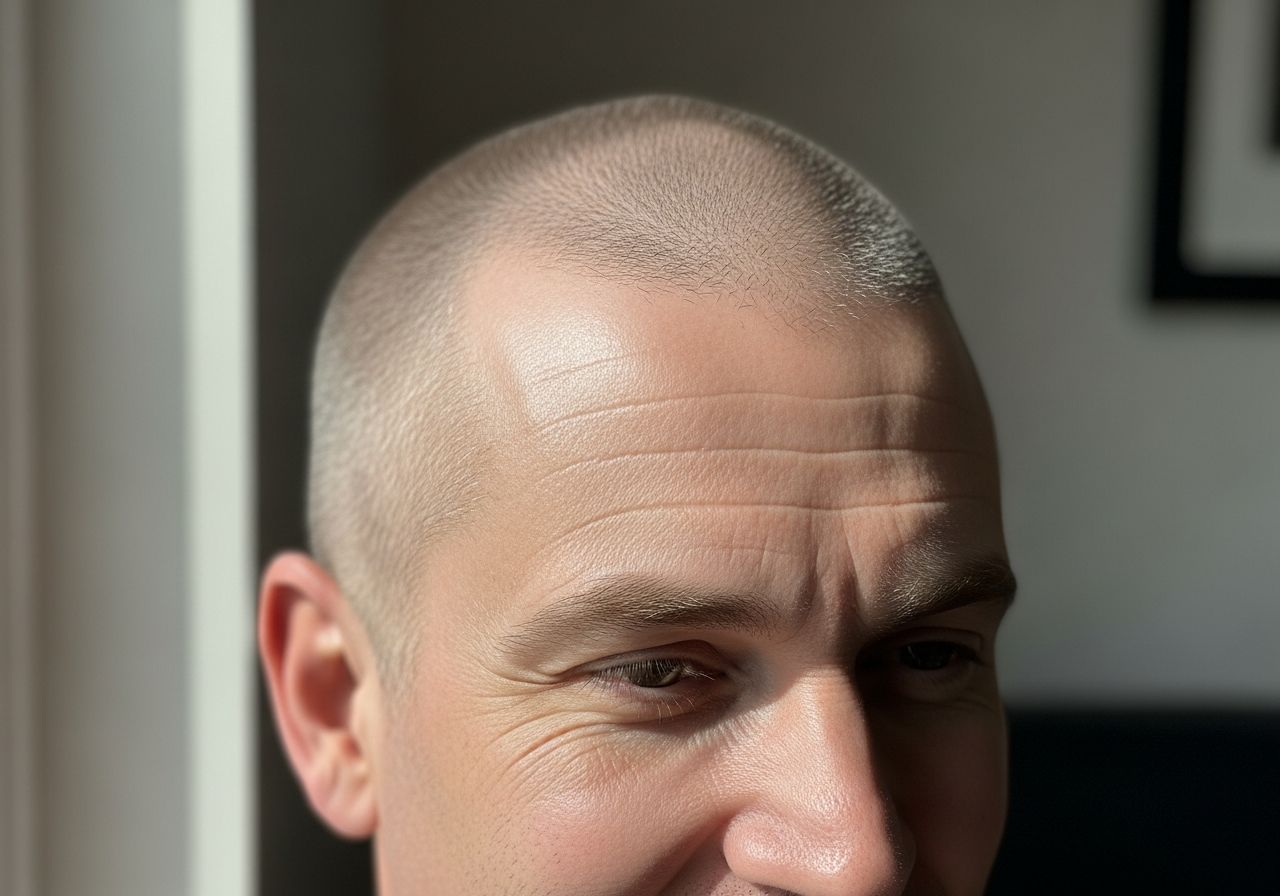
You've done the research, accepted the diagnosis, and now you're staring at two very different paths forward: a tattooing procedure that's essentially permanent, or a hairpiece you can take off at night. Both solve the same problem in different ways, and one will suit your life far better than the other. Here's how they actually compare, not in theory, but in the daily reality of wearing one.
For women with alopecia in the UK, scalp micropigmentation and wigs solve the same visual problem through completely different mechanics: one deposits pigment into the scalp to mimic hair density or a shaved-head look, while the other sits on top of your existing scalp as a separate piece. Neither regrows hair. Both camouflage what's already happening. The right choice depends on how much upkeep you can tolerate, how much change you want in your appearance week to week, and how your specific pattern of hair loss behaves.
1. The maintenance burden is where they differ most
Scalp micropigmentation is deposited into the epidermal and upper dermal layers of your scalp, at a depth of roughly 1.5 to 2 millimetres, which is why it doesn't wash out, rub off, or need repositioning in the morning. Once you're healed, which takes about a month, there's no daily routine beyond normal grooming and sun protection.
A wig or hairpiece asks more of you every single day. Adhesive needs reapplying, lace fronts need cleaning, and the piece itself needs washing, conditioning and restyling on a schedule, often weekly. If you're someone who wants to get up and go without a mirror routine, that's a meaningful difference, not a minor one.
2. Upfront cost looks different to long-term cost
SMP typically requires two to four sessions, each lasting one to five hours, with total pricing reflecting the area covered and the number of sessions needed. It's a bigger number to look at initially. But results generally last four to eight years before a touch-up is needed, so you're not paying repeat costs every few months.
Wigs have a lower barrier to entry, but the ongoing spend adds up. Human hair pieces need replacing roughly every 6 to 12 months with regular wear, synthetic ones sooner, and that's before you factor in styling products, adhesive, tape and professional maintenance appointments. Over a five-year period, the totals often land closer together than the sticker price suggests.
3. Swimming, sweating and British weather matter more than you'd think
Once scalp micropigmentation is fully healed, at around 30 days post-treatment, it holds up to swimming, humidity, rain and heavy workouts without shifting. There's no adhesive to fail, no lace to lift in the wind. For anyone who swims, runs, or simply lives somewhere it rains most weeks, that reliability matters.
Wigs and hairpieces are more weather-sensitive. Humidity can affect synthetic fibres, wind can dislodge a poorly secured piece, and swimming generally means removing it altogether or investing in a specific swim-safe option. If your lifestyle is active or outdoors, this is worth being honest with yourself about.
4. What each option can actually look like up close
Scalp micropigmentation creates the visual impression of a closely shaved head or, in areas with some remaining hair, the illusion of increased density between existing strands. It doesn't replicate long hair, movement or volume. If your alopecia has left patches or diffuse thinning and you want length and volume back, SMP alone won't deliver that, though it's sometimes combined with a hairpiece for that reason.
A wig can replicate length, colour, texture and volume that SMP simply cannot. But quality varies enormously, and a poorly fitted or lower-grade piece can look obviously artificial, especially at the hairline or parting. A well-made piece with a natural hairline is closer to undetectable, but that quality comes at a price point most budget wigs don't reach.
5. Alopecia type changes which option fits better
Diffuse thinning from female pattern hair loss, which affects around one in three women and typically preserves the frontal hairline, often responds well to scalp micropigmentation because there's usually enough remaining hair for the pigment to blend with. Alopecia areata, alopecia totalis or patchy scarring alopecia can be more variable, and a practitioner needs to assess your specific pattern before promising a particular result.
Wigs sidestep this variability almost entirely, since they sit over whatever is happening underneath rather than working with it. For women whose hair loss is still active, unpredictable or changing month to month, that flexibility can be the deciding factor while things stabilise.
Neither option is objectively better. One is a permanent, low-maintenance camouflage that works within the limits of your remaining hair; the other is a removable, changeable piece that asks more upkeep but offers more versatility in length and style. Knowing which trade-off suits your week, not just your budget, is the real decision here.
Frequently Asked Questions
Is SMP better than a wig for alopecia?
Neither is universally better. SMP suits women wanting a permanent, low-maintenance option that holds up to swimming and exercise, while wigs suit those wanting changeable length, volume or colour, or who prefer a removable option while their alopecia is still active.
Does scalp micropigmentation work for all types of alopecia?
Scalp micropigmentation suits androgenetic and diffuse thinning particularly well, since remaining hair helps the pigment blend. Alopecia areata, totalis or scarring alopecia can respond well too, but a practitioner needs to assess your specific pattern first, as results vary more with these types.
How long does SMP last compared to a wig?
SMP typically lasts four to eight years before a touch-up is needed. Wigs, by contrast, generally need replacing every six to twelve months with regular wear for human hair pieces, and sooner for synthetic ones, making the ongoing cost and effort quite different.
Can you swim with scalp micropigmentation?
Yes, once fully healed, which takes around 30 days after the final session. Before that, swimming pools should be avoided for 28 days as part of aftercare. After healing, SMP holds up to swimming, sweating and humidity without shifting or fading noticeably.
Does SMP hurt more than getting a wig fitted?
SMP involves a tattooing needle depositing pigment into the scalp, so there's mild discomfort during sessions, similar to a tattoo, though it varies by pain tolerance. Wig fitting is not painful but takes time to get right, particularly for lace front pieces requiring precise adhesive application.
Frequently asked questions
- Is SMP better than a wig for alopecia?
- Neither is universally better. SMP suits women wanting a permanent, low-maintenance option that holds up to swimming and exercise, while wigs suit those wanting changeable length, volume or colour, or who prefer a removable option while their alopecia is still active.
- Does scalp micropigmentation work for all types of alopecia?
- Scalp micropigmentation suits androgenetic and diffuse thinning particularly well, since remaining hair helps the pigment blend. Alopecia areata, totalis or scarring alopecia can respond well too, but a practitioner needs to assess your specific pattern first, as results vary more with these types.
- How long does SMP last compared to a wig?
- SMP typically lasts four to eight years before a touch-up is needed. Wigs, by contrast, generally need replacing every six to twelve months with regular wear for human hair pieces, and sooner for synthetic ones, making the ongoing cost and effort quite different.
- Can you swim with scalp micropigmentation?
- Yes, once fully healed, which takes around 30 days after the final session. Before that, swimming pools should be avoided for 28 days as part of aftercare. After healing, SMP holds up to swimming, sweating and humidity without shifting or fading noticeably.
- Does SMP hurt more than getting a wig fitted?
- SMP involves a tattooing needle depositing pigment into the scalp, so there's mild discomfort during sessions, similar to a tattoo, though it varies by pain tolerance. Wig fitting is not painful but takes time to get right, particularly for lace front pieces requiring precise adhesive application.
More on Alopecia
Alopecia
What scalp micropigmentation actually costs when you're treating alopecia in the UK
Wondering what SMP for alopecia really costs in the UK? Here's how patch size, session count and clinic location shape the final price, no guesswork needed.
Alopecia
What alopecia areata clients can realistically expect from scalp micropigmentation
Patchy alopecia and SMP: see what healed results actually look like session by session, and where hair replication has honest limits.
Alopecia
5 things to know before starting scalp micropigmentation for alopecia areata
Patchy hair loss from alopecia areata needs a different SMP approach. Here's exactly what to expect across every stage, from assessment to touch-ups.